Lewmar Shallow Water Anchors
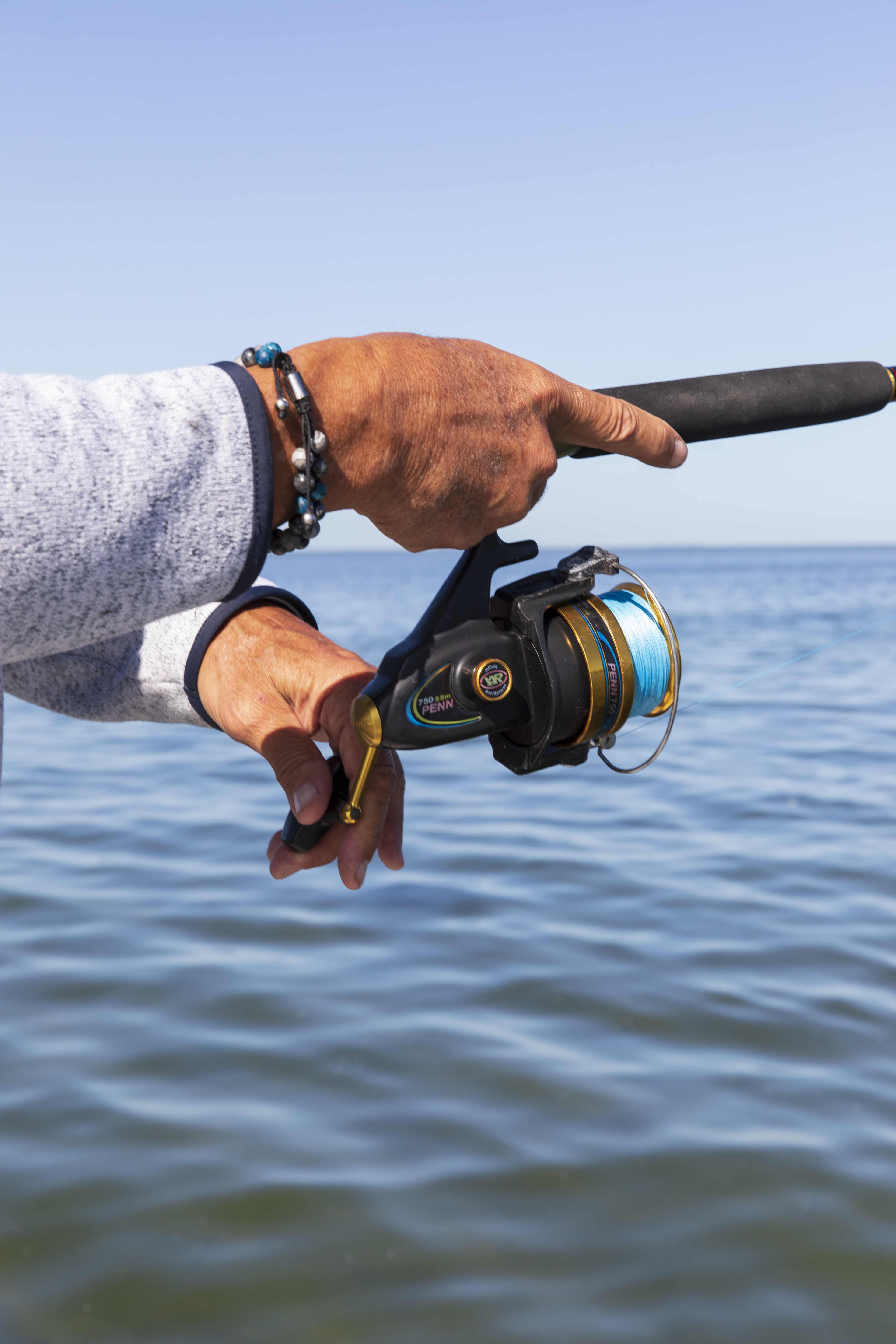
Close-up of an angler's hands working a spinning reel over open water

Shallow Water Anchor or GPS Trolling Motor?

How to choose the hold that fits the water you fish.

If you're deciding between a shallow water anchor and a GPS trolling motor, it's worth getting the difference straight before you buy one and spend the season wishing you had the other. Both will hold a boat. They just don't hold it in the same water.

In this guide, we cover everything you need to choose the right hold for the way you actually fish. For example, did you know that under about 8 feet, a shallow water anchor is the quieter choice? The spike doesn't wash the bottom, and it doesn't hunt the bow into the wind. In deeper water, and in windy open water, a GPS trolling motor is the tool that can make the hold. Plenty of boats should carry both.

Here's the short version, if you want it before the details:

  • Choose a shallow water anchor for water under about 8 feet, and for any short stop where you want it quiet.
  • Choose a GPS trolling motor when the water is deeper than the pole, or when windy open water is the problem.
  • Choose both if your days start in a creek and end on open water. A lot of boats should.

On this page

Benefits of Getting This Right

If you're not sure the distinction is worth a whole guide, here's what the right call does for a day on the water:

  • Quiet stops in skinny water, with nothing thrusting under the boat
  • A bottom that stays the way you found it
  • A real hold when the water is deeper than the pole can reach
  • A bow you can keep pointed where you want it in open wind
  • Battery use that matches the stop, instead of a motor running the whole time you fish
  • A simple plan for days that change, creek in the morning and open water later

Get it wrong and the boat still floats. The stops are just harder than they needed to be. A washed-out pocket. A motor you can hear the whole time you're trying to fish. Or a spike hanging in water it will never reach.

One angler fishing from the bow while another deploys a shallow water anchor at the stern of a jon boat

Two Ways to Hold the Boat

First things first. These are two different tools, and most of the confusion comes from asking one of them to do the other's job.

Shallow Water Anchor

A shallow water anchor is a spike mounted on the boat. You drop it for a short stop in water the pole can reach, and you bring it back up when the stop is over. Once it's set, nothing is thrusting. The hold is the spike sitting in the bottom.

Lewmar builds two. Axis is the electric one. A keychain remote sets and retrieves it, and Axis 6 and Axis 8 both deploy in 8 seconds. The pole is only moving during that deploy and the retrieve. It's rated for boats up to 26 ft and 4,500 lb. Vector is the manual one. You set it with a strap, there's no battery in the circuit, and it's rated for boats up to 22 ft and 3,000 lb. Which of those two you want is its own decision. We cover it in Axis or Vector.

Pros

  • Quiet once the spike is set
  • Doesn't wash silt or bait off the spot
  • Doesn't hunt the bow into the wind
  • Axis is a short burst on the battery. Vector draws nothing

Cons

  • Not a hold in water deeper than the pole
  • A single spike stops the boat, but wind and current can still swing the bow around it
  • The wrong tool overnight, on hard sand that won't take a spike, or on a tide that can lift the boat off the tip
Angler at the transom of a bass boat with a shallow water anchor in the water and a trolling motor stowed on the bow

GPS Trolling Motor

A regular trolling motor moves the boat. A GPS trolling motor can do that too, and it can also stay on a spot without you steering.

Start with the regular one, because that's the motor most people already know. It's an electric motor, usually on the bow. You steer it with a foot pedal, a remote, or a hand tiller. Point it, give it power, and the boat goes that way. The motor doesn't know where the boat is. The moment you stop driving it, wind and current take over. If you want to stay on a spot, your foot stays on the pedal, or you go find something else to hold you.

A GPS trolling motor is that same motor with a GPS receiver added, so it knows the boat's position, and a sensor that knows which way the lower unit is pointed. You can still creep a bank or follow a contour yourself, the same as with any trolling motor. The new part is the hold. You put the boat where you want it and press the button. The motor saves that position.

From there, you aren't the one making the corrections. Wind or current pushes the boat off the spot. The motor sees it, turns the lower unit back toward the saved point, and runs the prop until the boat is close again. Then it eases off. It keeps doing that for as long as you leave the hold on. The boat is not locked in place. It slips off the point, and the prop pushes it back. People call that a virtual anchor. Nothing is in the bottom. The prop is the anchor.

That run is what lets it hold you in water a pole will never reach, and what lets it keep the bow pointed when the wind is up. It's also why you can hear it the whole time you're stopped, and why the bottom under the boat gets washed in skinny water.

On most boats that motor is a Minn Kota, a Garmin Force, a Lowrance Ghost, or a MotorGuide. Minn Kota calls the hold Spot-Lock. Garmin calls it anchor lock. On the Ghost, Lowrance calls it Anchor. MotorGuide calls it Pinpoint GPS. The names are different. The motion is the same. If the motor is running to keep you there, it's thrusting. If the spike is set, it isn't.

Here's the difference in one pass:

  • A regular trolling motor goes where you point it, and only while you're pointing it. Stop steering and the hold stops with you.
  • A GPS trolling motor does that job, and it can also save a position and steer itself back to it.
  • A shallow water anchor doesn't steer at all. The spike sits in the bottom, and the boat stays until you bring it up.

Pros

  • Holds in water deeper than the pole can reach
  • Thrust can keep the heading in windy open water
  • You don't have to think about whether the spike reached the bottom

Cons

  • The motor runs the whole time you're stopped, and that run is the noise
  • Corrections come from the prop, which washes the bottom under the boat
  • It draws power for the entire hold, not just for a few seconds at each end
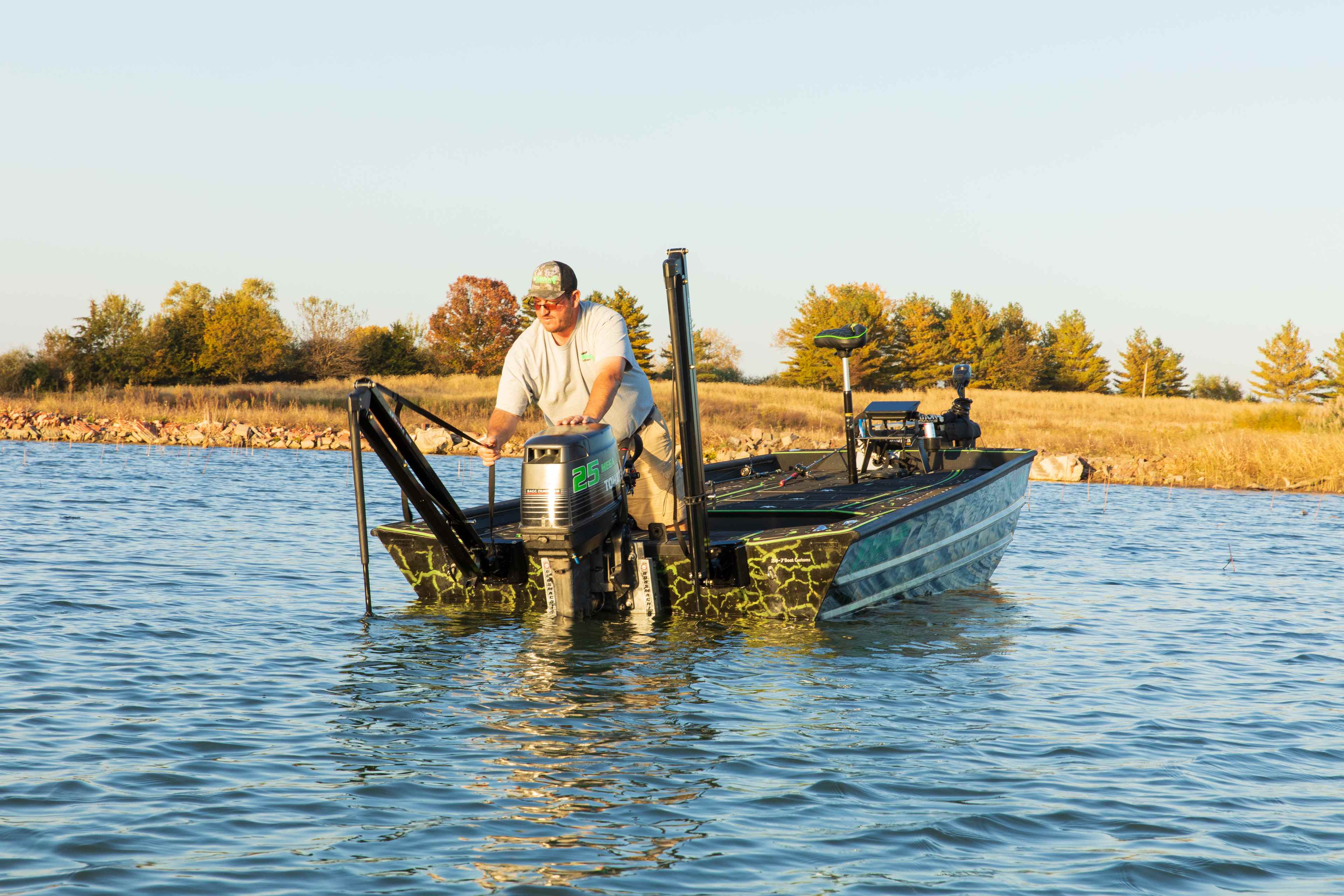
Angler fighting a fish from the bow of a bass boat held in the reeds, with a shallow water anchor deployed beside the outboard

When you're comparing the two, it helps to see the jobs in one place. These rows are conditions, not a scorecard.

Side by Side

Shallow water anchor
The spike
The hold
The spike goes into the bottom and stays there. Once it is set, nothing is thrusting.
Where it is the right tool
Under about 8 feet. Creeks, brush, and any short stop where you do not want the bottom washed.
Noise
Quiet once the spike is set. On Axis the pole is moving only during the 8-second deploy and the retrieve. Vector is set with a strap.
The bottom
The spike touches the bottom and sits. It does not blow silt or bait off the spot.
Bow in the wind
A single spike does not hunt the bow into the wind. Wind and current can still swing the boat around that one point. Two spikes are their own guide.
While you are fishing
The work is the set and the retrieve. Between them the spike is idle.
Battery
Vector draws nothing. Axis draws about 15–20A for the 8 seconds the pole is moving. Thirty cycles is about 1.0–1.3 amp-hours, then it waits.
When it is the wrong tool
Water deeper than the pole, hard sand that will not set, overnight, and a tide that lifts the boat off the tip.
Both on the same boat
Use the spike when the water is shallow enough and you want the stop quiet.
GPS trolling motor
The prop
The hold
The prop corrects the boat for as long as you want it held.
Where it is the right tool
Water deeper than the pole can reach, and windy open water.
Noise
The motor runs while it holds. That run is the noise.
The bottom
Corrections come from the prop, which washes the bottom under the boat.
Bow in the wind
Thrust can hold the heading in open wind. It does that by running the motor.
While you are fishing
The motor keeps working the whole time you are stopped.
Battery
Draws for the whole hold.
When it is the wrong tool
Skinny water where wash and noise cost the spot.
Both on the same boat
Use the motor when the water is deeper or the wind is the problem. Many boats do both on the same day.

If the table answered it, you're in good shape. The questions below are how you apply it to your boat and the water you fish.

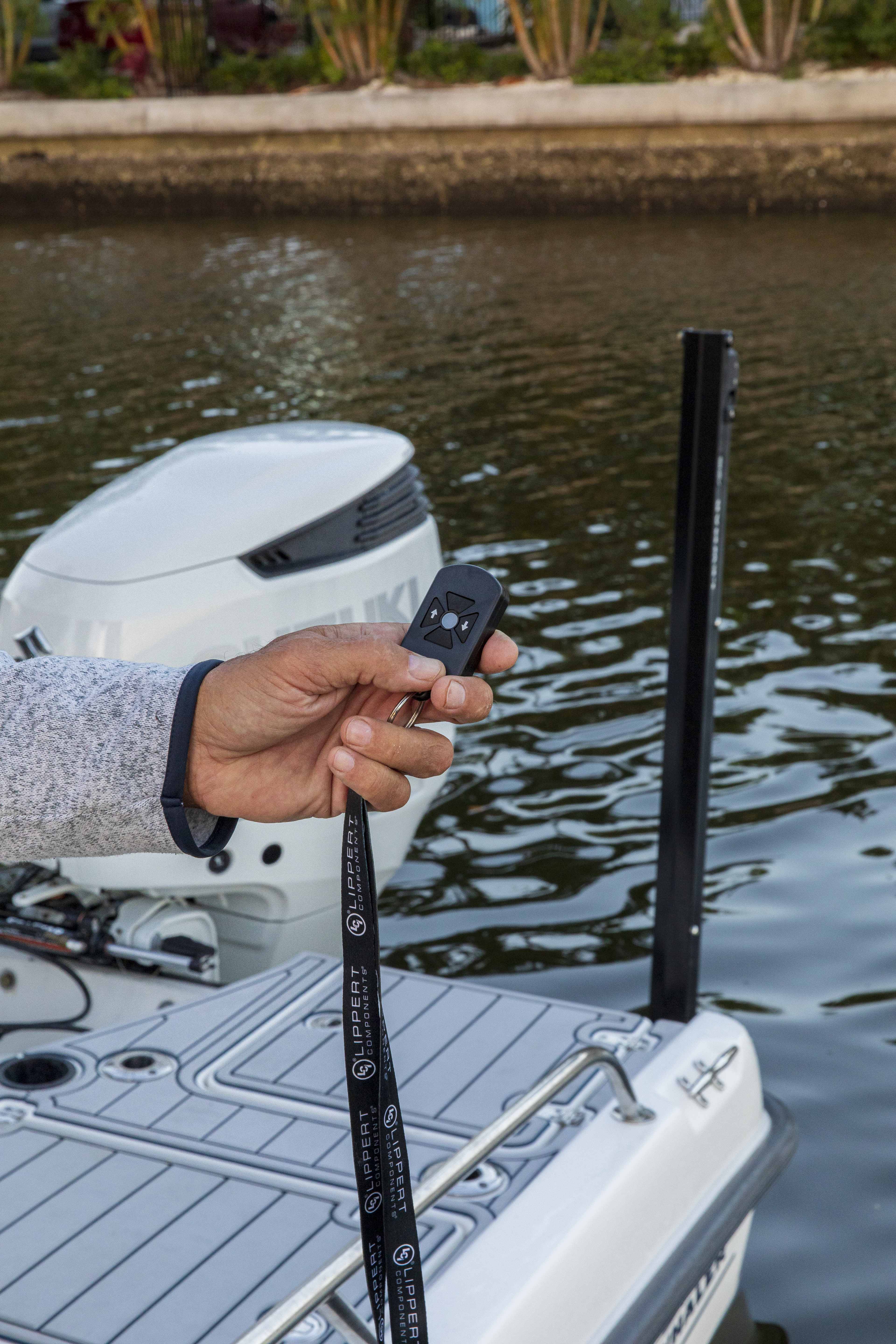
Hand holding a Lewmar keychain remote beside a deployed shallow water anchor and an outboard

5 Questions to Answer Before You Buy

There aren't any right or wrong answers here. It depends on the water you fish, how you like to sit on a spot, and whether that spot needs to stay quiet.

1. How deep is the water you fish?

Start here. Depth decides more than anything else on this page.

Under about 8 feet, the spike can do the job, and the shallow water anchor is the better hold. You set it, the boat goes quiet, and you fish. A GPS trolling motor can park you in that same water, but it parks you by thrusting, right on top of the spot you came for.

About 8 feet is the practical line for this choice. It isn't a promise that an 8-foot pole fishes 8 feet of water. The pole mounts on the boat, so some of its length is above the water, and the tip has to go into the bottom. The number on the pole is reach, not the depth you can sit in. Choosing 6-foot or 8-foot is the pole-length guide.

Why does the deep water matter so much? If the water is simply deeper than the pole, the tip never arrives. You aren't anchored. You're drifting with a pole hanging under the boat. That's a GPS trolling motor, along with the other cases where the spike is the wrong tool: hard sand, overnight, and a tide that can lift the boat off the tip. Those live in when a shallow water anchor is the wrong tool.

2. Are you on cover, or in the wind?

Think about the last few trips, not the one you wish you took.

Creeks, brush, a laydown, a mat, a cut in the bank. Short stops, short casts, and a bottom you don't want blown out. The spike is the tool. You set it, you fish, you bring it up, and you move to the next bend. A GPS trolling motor in that same pocket is thrust, noise, and wash next to the cover. The prop doesn't have to be aimed at the fish to move the water they're using.

Open wind is the other way around. A single spike stops the boat at one point. It won't keep the bow pinned on a bank while the wind and a chop work on the hull. Thrust can hold that heading, and it does it by running the motor the whole time you're stopped. On open water, that's usually the right trade. In the creek you just left, it isn't.

One thing worth knowing before it surprises you. A single spike doesn't hunt the bow the way thrust can. Wind and current can still swing the boat around that one point. If you need the boat square to a dock, a grass line, or a stern with several rods in the water, that's one shallow water anchor or two.

3. Will noise and a washed-out bottom cost you the spot?

This is the part you feel from the deck, so it's worth saying plainly.

A shallow water anchor touches the bottom and then sits. The noise is the set and the retrieve. On Axis, the pole moves for the 8-second deploy and again on the way home, and then it's idle. On Vector, you work the strap, and then it's idle too. Either way, the hold itself is quiet.

A GPS trolling motor holds by running the prop. Every correction is thrust, and that thrust is the noise at the bow. In shallow water it also reaches the bottom. It lifts silt, and it can blow bait off the spot you're fishing. Anglers call the steering part of those corrections hunting. That's Spot-Lock, anchor lock, Anchor, or Pinpoint GPS doing the job it was built for. It's just the wrong motion for a spot you don't want disturbed.

4. What will each one ask of the battery?

An Axis draws power while the pole is moving, and then it waits. Figure about 15 to 20 amps for the 8 seconds the pole is deploying. Thirty of those cycles comes to about 1.0 to 1.3 amp-hours, and then the anchor sits. That's a burst, not a load that runs for the hour you're fishing. A Vector draws nothing, because there's nothing on it that needs a battery.

A GPS trolling motor draws for the whole hold. Leave it on while you work a stretch and it has been working that entire stretch. That's a different ask of the house battery than an anchor that spends the stop sitting still. We don't put an amp number on the motor here.

If you want those Axis figures set next to a house battery, the worksheet is Axis power and wiring.

5. Should the boat carry both?

Often, yes. This is the question the comparison is really asking.

Take a normal day. The morning is a creek, the pole can reach, and the fish are on the cover. That's the spike. Later the wind is up on a flat the pole can't reach, or you want the bow held while you move down a bank. That's the GPS trolling motor. Same boat. Same day. Neither tool failed. Each one is in the water it's for.

Three ways to leave the decision:

  • Both, if your days actually change like that. Skinny water in the morning, open or deeper water later. This is the common case, and it's a better plan than making one tool do the other's job.
  • The spike only, if the fishing you do stays in water the pole can reach and you want those stops quiet.
  • A GPS trolling motor only, if the water is deeper than the pole, or the hold you need is wind and open water. A spike on that day doesn't hold the boat.

This isn't a contest between brands. It's which tool is in the water in front of you.

Once you know you want the spike, Lewmar gives you two ways to run it. Choose the Axis if you want the remote, on boats up to 26 ft and 4,500 lb. Choose the Vector if you want nothing to wire, on boats up to 22 ft and 3,000 lb. That choice is Axis or Vector. How boat size, pole length, and one-or-two fit together is how to choose a shallow water anchor.

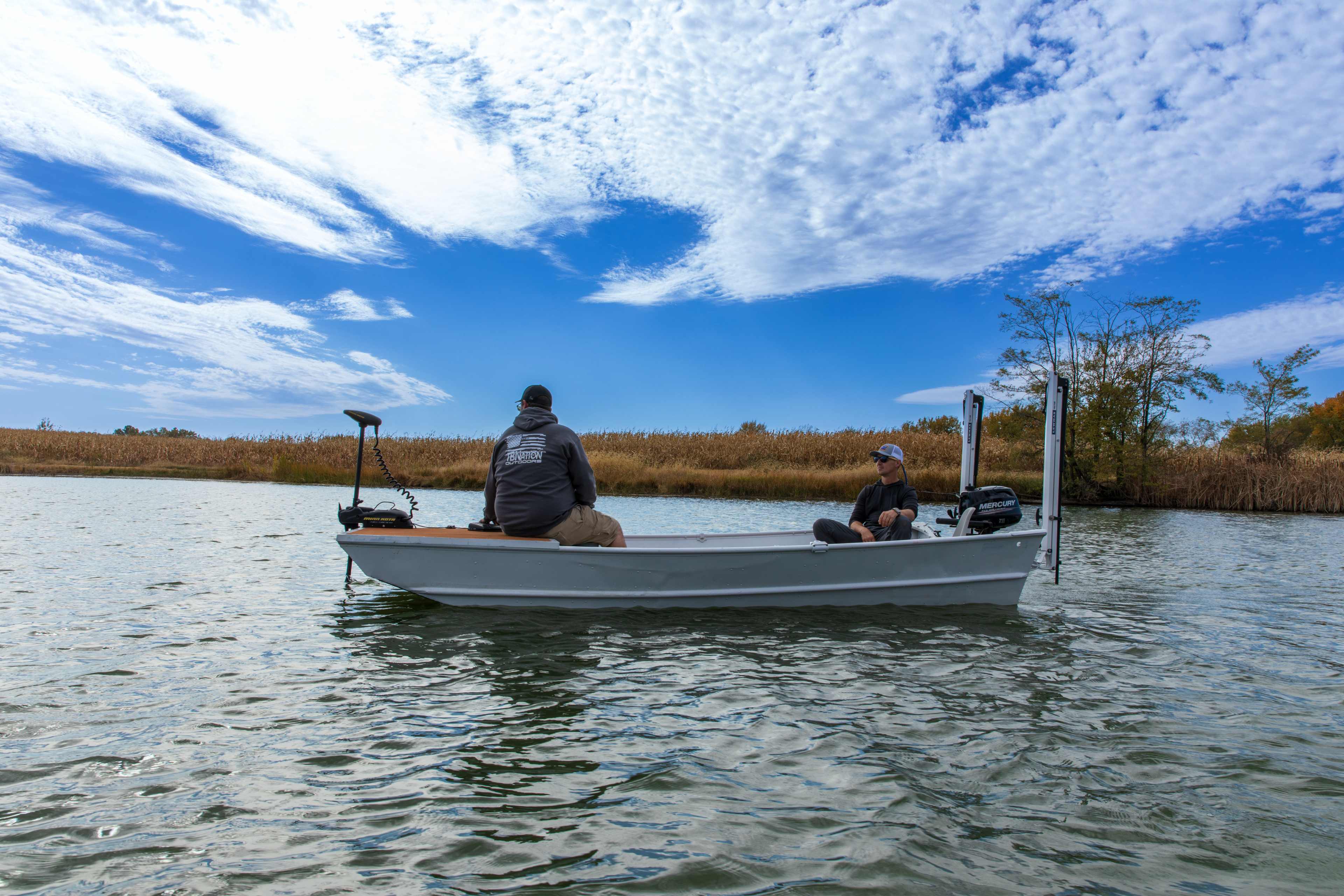
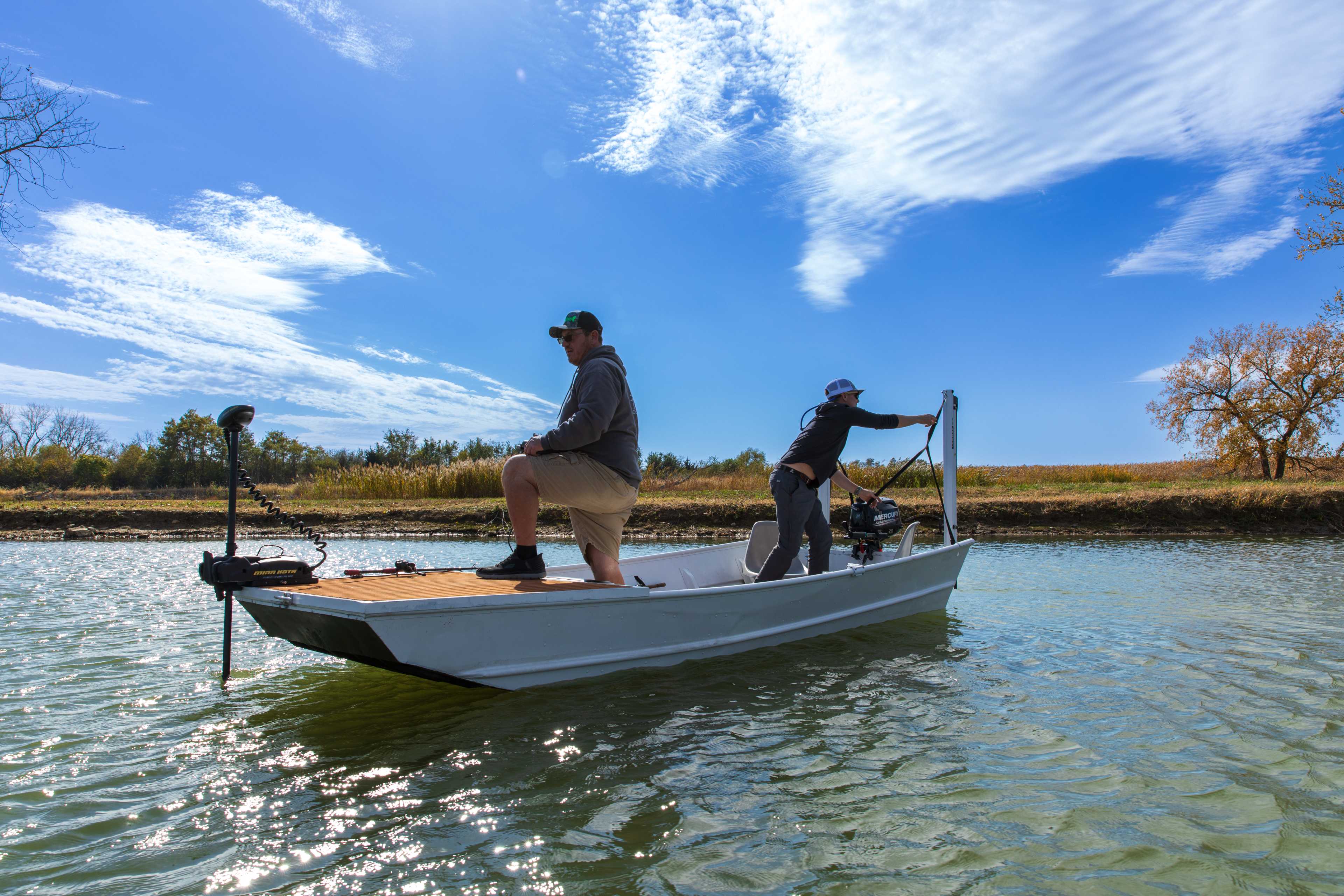
Two anglers in a jon boat with a trolling motor at the bow and a shallow water anchor stowed at the transom

Questions People Ask

Under about 8 feet, get the shallow water anchor when you want a quiet hold that doesn't wash the bottom. In deeper water, or in windy open water, use a GPS trolling motor. Many boats should have both, and use each one for the water it actually holds.

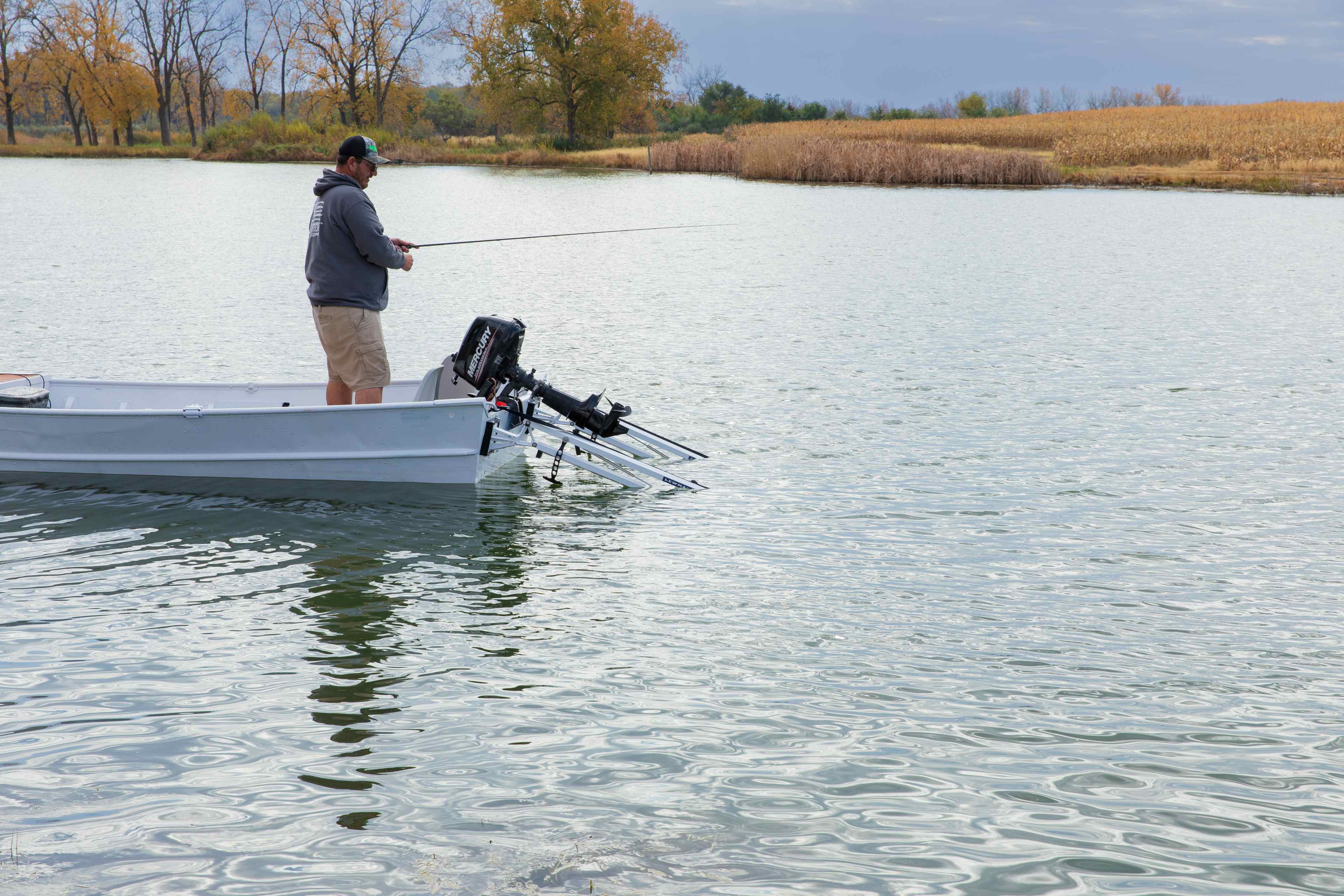
Angler casting from the bow of a jon boat while a shallow water anchor holds the stern

Ready to Choose?

  • Already know you want a spike: Axis or Vector splits the electric Axis and the manual Vector by boat size and whether you want a battery in the circuit.
  • Still building the whole setup: how to choose a shallow water anchor.
  • The pole won't reach, or you're thinking about overnight, hard sand, or a rising tide: when a shallow water anchor is the wrong tool.
  • The bow swings on one spike: one shallow water anchor or two.
  • You want the Axis numbers against a house battery: Axis power and wiring.

If the comparison in your head is a loose stake-out pin rather than a trolling motor, that's the next guide: Vector or a stake-out pole.

When you're ready to look at the anchors themselves, the Axis is the electric one and the Vector is the manual one.