Lewmar Shallow Water Anchors
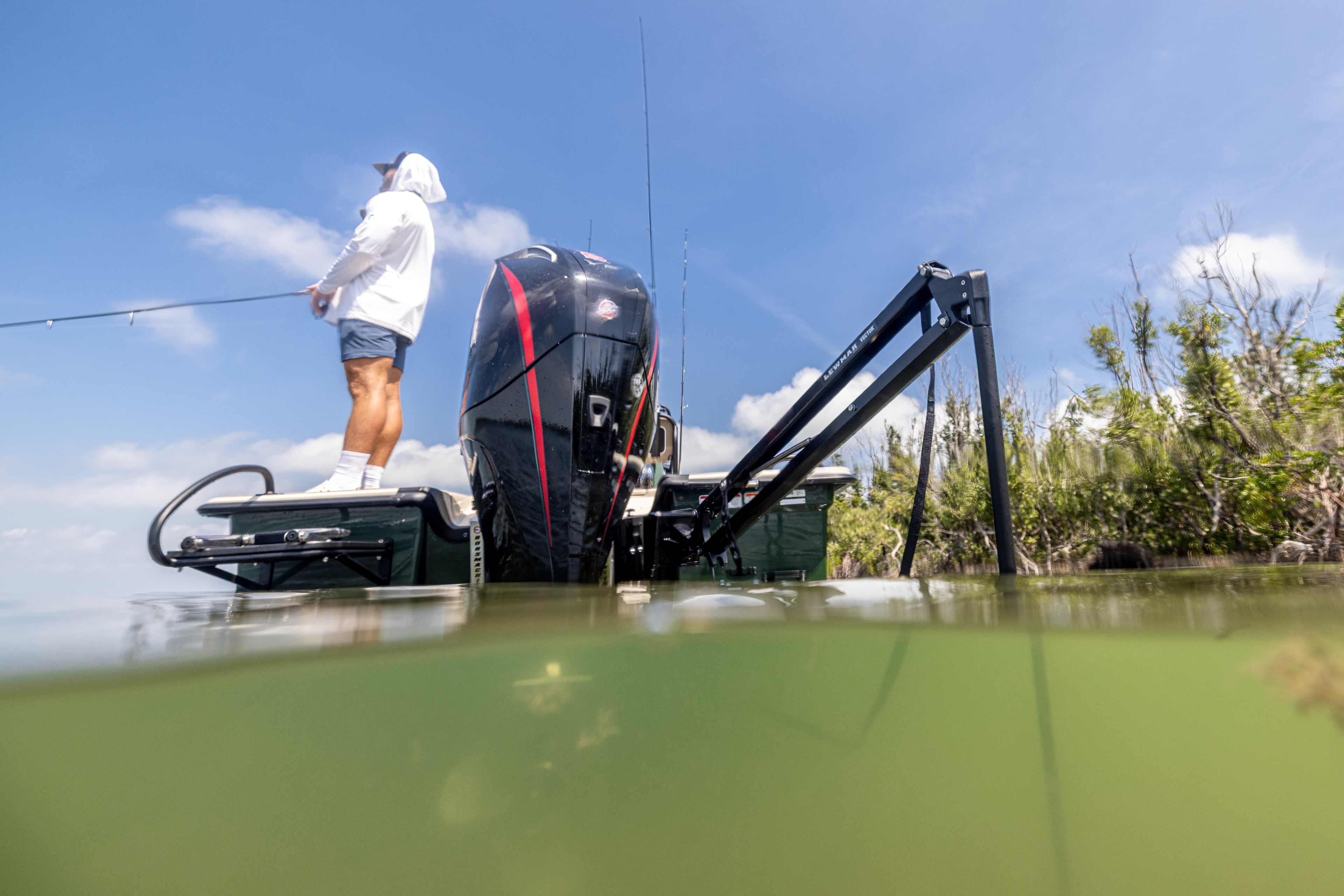
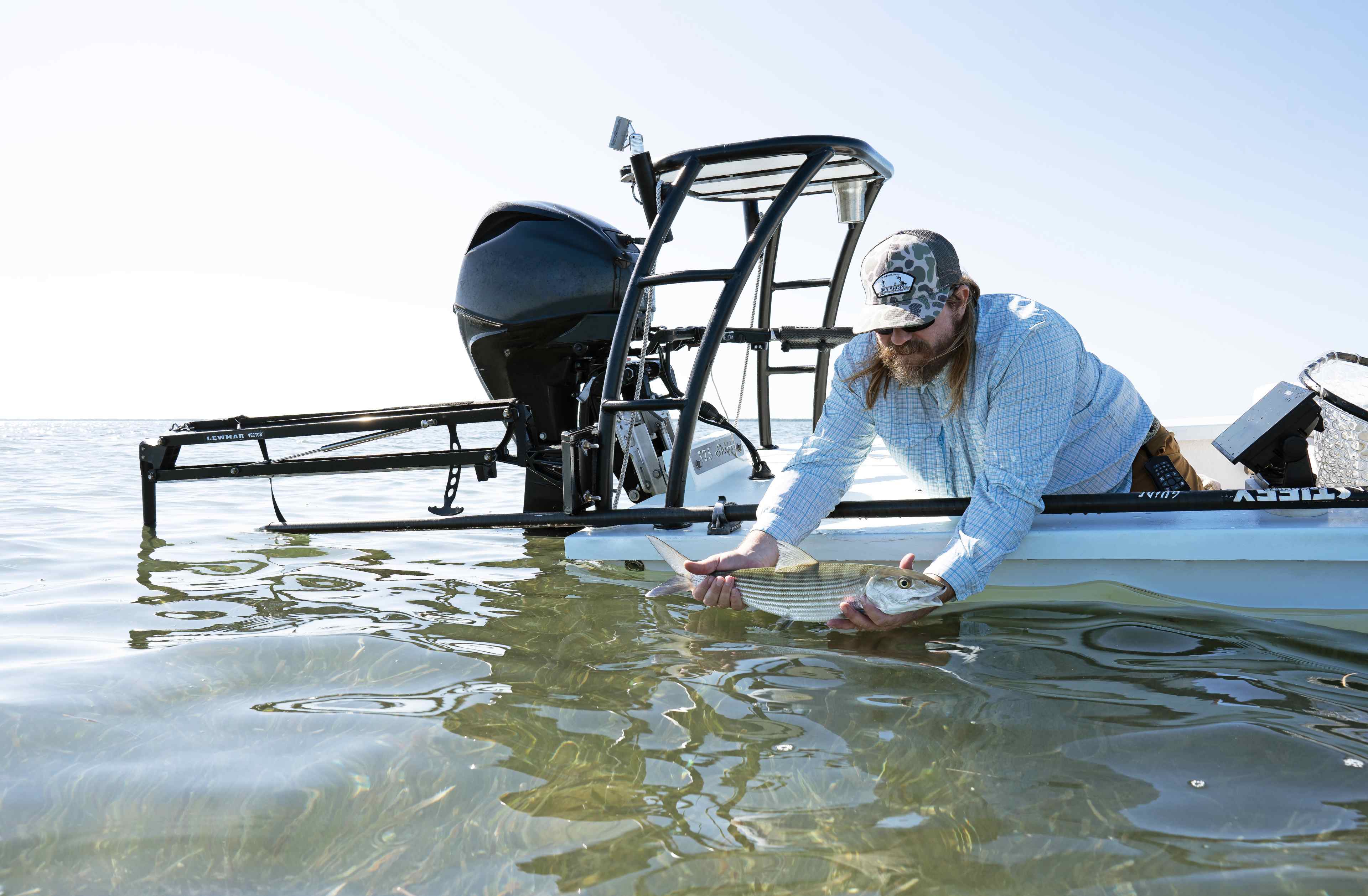
Angler releasing a fish from a skiff while a white Lewmar Vector shallow water anchor holds the boat

Axis or Vector?

How to choose between Lewmar's electric and manual shallow water anchors.

Choosing a shallow water anchor is a lot like choosing a fishing spot. There are two good options in front of you, they look a lot alike from a distance, and the wrong pick won't ruin your day. It will just make it a little harder than it needed to be. The good news is that you can get this one right in about five minutes, and we're here to help.

In this guide, we'll cover everything you need to choose between Lewmar's two shallow water anchors, the Axis and the Vector. We'll start with the answer, then walk through the questions that actually decide it: your boat, your hands, your install day, and what happens if you change your mind later.

On this page

The quick answer

Here's the short version, and it works for most boats:

  • Choose the Vector if your boat is within 22 ft and 3,000 lb and you'd rather not put a battery in the circuit.
  • Choose the Axis if your boat is bigger, up to 26 ft and 4,500 lb, or if you want to run the anchor from a keychain remote.
  • Can't decide? If the Vector fits your boat but you already know you want the remote, buy the Axis. If you want to fish now and wire later, start on a Vector. The mounting holes carry over.

That's it. If you only needed the verdict, you're done. If you want to know why, and what to watch for, keep reading.

Angler fishing from the bow of a skiff while a Lewmar shallow water anchor holds the boat along a mangrove shoreline

Wait, what's the difference?

Before we get into the details, let's make sure we're on the same page. A shallow water anchor is a pole that mounts on your boat, drops into the bottom, and holds you in place for a short stop in water the pole can reach. If the pole can reach the bottom, it's a quick way to stay put on a flat, along a dock, or on a grass edge while you fish.

Lewmar builds two families, and they do exactly the same job. The difference is who does the work.

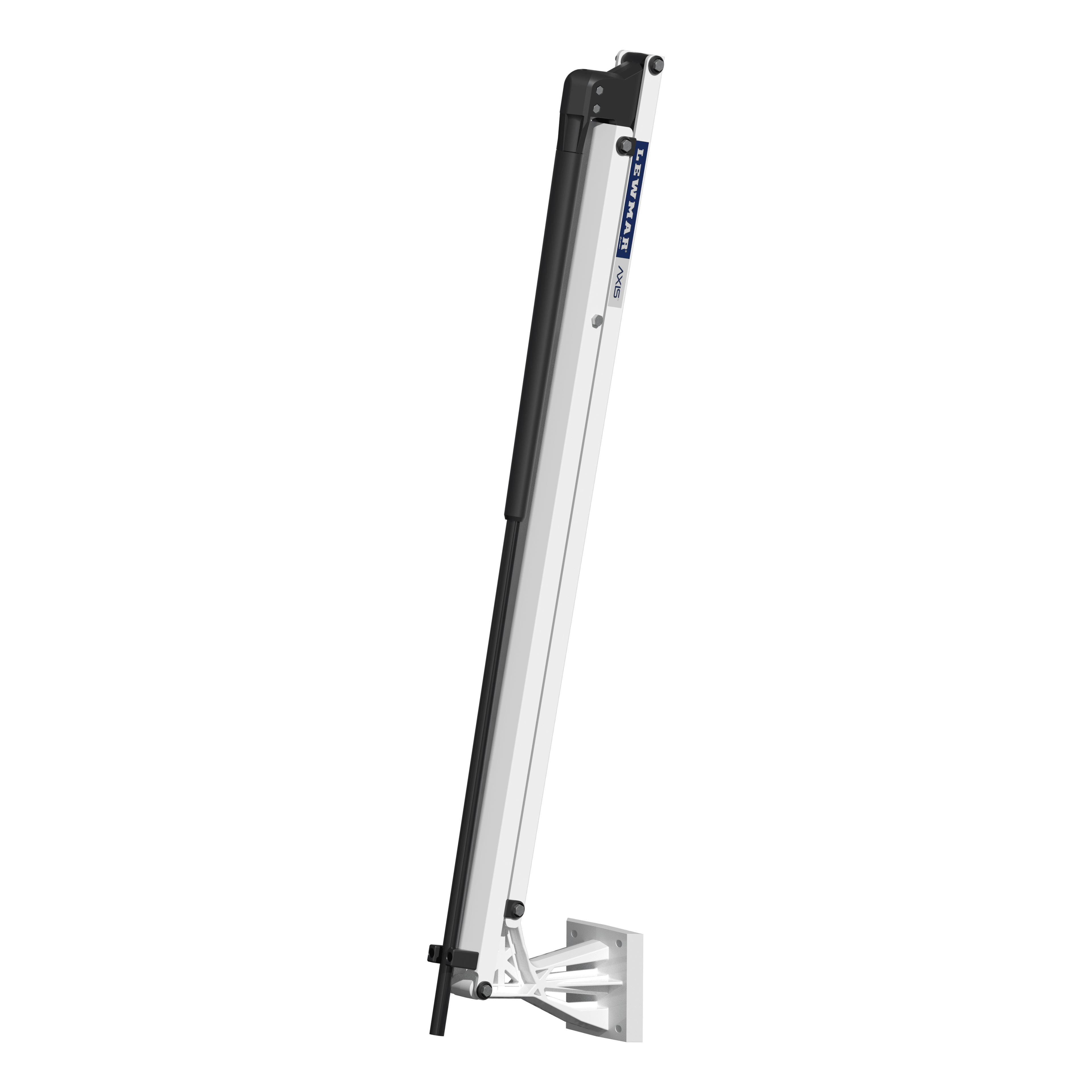
Axis is the electric one. A 12V system and a keychain remote set and retrieve the pole for you. You press a button.

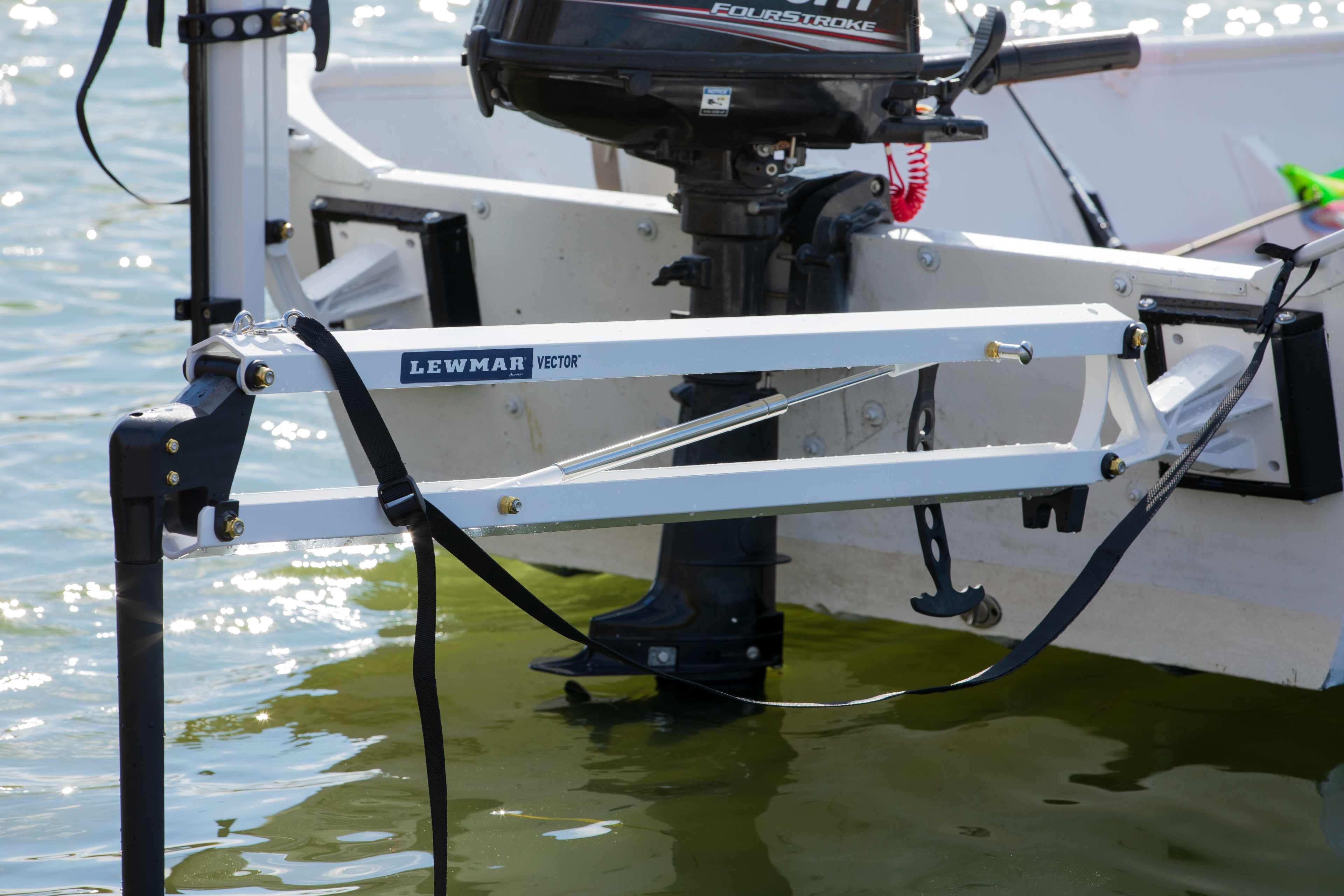
Vector is the manual one. A strap and a buckle do the work, and so do you. There's no battery, no wiring, and nothing to program.

Underneath that, they have a lot in common:

  • The same 4-bar linkage, which swings the pole down and back up.
  • A fiberglass spike for the pole.
  • A powder-coated aluminum finish, in white or black.
  • Saltwater use. Both are saltwater-rated.
  • The same industry-standard 4-bolt mount.
  • The same two pole lengths, 6-foot and 8-foot.

And no, the Axis isn't the "long" one. Electric versus manual is one decision. Pole length is a different decision, and we cover it in how to choose a shallow water anchor. The numbers for both lengths are in the full spec comparison below.

When you're comparing anchors, it helps to see everything in one place. Here's how they stack up.

Axis and Vector side by side

Axis
Electric
Boat rating
Up to 26 ft and 4,500 lb
How it runs
Electric, 12V. A keychain remote talks to the RF module that comes with the anchor.
Deploying
Press the remote. Axis 6 and Axis 8 both deploy in 8 seconds.
Retrieving
Momentary: hold the button until it's up. Latching: press again.
In the box
Anchor, mounting hardware, RF module, fuse, keychain remote
Install day
4-bolt mount, plus a 12V connection, the module, and programming the remote
Running two
Each Axis has its own module and its own remote.
Best for
Bass boats, bay boats, and flats boats
Vector
Manual
Boat rating
Up to 22 ft and 3,000 lb
How it runs
Manual. No battery, no module, no remote.
Deploying
Release the elastic strap, ease off the adjustment buckle, and press the anchor out by hand.
Retrieving
Pull the retrieval strap until the anchor is vertical, tighten the buckle, and re-engage the elastic strap.
In the box
Anchor, mounting hardware, pull strap
Install day
4-bolt mount. When the hardware's tight, you're done.
Running two
Each Vector has its own strap.
Best for
Skiffs, jon boats, and aluminum boats

That's the decision table. The complete spec sheet, with weights, heights, and electrical numbers, is further down. First, let's talk about how to use this one.

Four questions to ask before you buy

Answering these will narrow things down fast, and in most cases they'll make the choice for you.

1. How big is your boat?

This is the one that sometimes decides everything, so start here.

A boat rating is a pair of numbers, and both halves have to be true. The Vector is rated for boats up to 22 ft and up to 3,000 lb. Go over on length or go over on weight, and the Vector is the wrong anchor, even if the other number looks comfortable. A heavily loaded 20-footer can sail past 3,000 lb. A light boat that tapes out at 23 feet is over on length. Check both numbers against your own boat before you buy.

The Axis steps up to 26 ft and 4,500 lb. So if you're past the Vector on either number but inside the Axis rating on both, the decision's made. Buy the Axis.

Boat type is a useful gut check, too. The Axis suits bass boats, bay boats, and flats boats. The Vector suits skiffs, jon boats, and aluminum boats. Those are the boats each one tends to fit best, and your length and weight numbers still have the final say.

And if you're past the Axis on either number? Then neither anchor in this guide is rated for your boat. We'd rather tell you that straight than sell you something that isn't built for the load.

2. Where are you when you find the spot?

Think about the last time you found a fish. Where were you standing?

If you're usually at the bow, or on the trolling motor, you're a long way from the anchor. The Axis lets you set it from where you already are, no walk required.

If you're comfortable stepping to the anchor each time you stop, the Vector's strap works fine. Plenty of anglers like it exactly that way. Everything is right there in front of you, and nothing needs a charge.

People like to turn this into a question of how serious an angler you are. It isn't. If you want the button, buy the button. A simpler install is a bad trade for a remote you'll wish you had by the second trip.

3. Do you want to wire anything?

Be honest here. The Axis is a wiring project. It's not a hard one, but it's real: a 12V connection, a fuse, a module near the battery, and a remote to program. The Vector isn't a wiring project at all. When the four bolts are tight, it's done.

If you want to fish this weekend and you'd rather not open up the battery compartment on a weeknight, that's a perfectly good reason to buy the Vector. Which leads to the last question.

4. Might you want to move up later?

If the answer is "maybe," you're in good shape. A Vector on a boat inside its rating can become an Axis later without redrilling the mount. We'll walk through exactly what carries over below.

Angler at the console of a bass boat, with a white Lewmar shallow water anchor stowed beside the outboard

What the stop actually feels like

You're not really buying a pole. You're buying the moment between "this is the spot" and "I'm fishing." So let's walk through that moment for each anchor.

On the Axis

You run the Axis from a keychain remote, and when you program it, you choose how it behaves.

Momentary means the pole moves only while you hold the button. Let go and it stops. This is the mode for easing the spike down, pausing halfway, or feeling for bottom when you're not sure how much water is under you.

Latching means one press and you're done. The pole runs until the spike hits bottom, and your hands go back to the rod or the wheel. A later press brings it home.

Don't mistake these for two speeds. Axis 6 and Axis 8 both deploy in 8 seconds either way. The mode only decides whether your thumb has to stay on the button for those 8 seconds. You set it in the manual.

On the Vector

On the Vector, you are the motor, and you're standing at the anchor. The steps are simple:

  1. Release the elastic strap so the arm is free.
  2. Release the tension with the adjustment buckle.
  3. Press the anchor out and let it go down.

When the stop is over, reverse it. Pull the retrieval strap until the anchor is vertical, tighten the buckle, and re-engage the elastic strap so everything stays put for the run home.

There's no battery to forget over the winter and no remote to leave in a jacket. There's also no way to do it from the bow. If that sounds like the right kind of simple, the Vector is your anchor. If it sounds like a chore you'll resent in a crosswind, get the Axis, even on a boat the Vector could have carried.

One rule for both: stow it before you move

Whichever anchor you run, the rule is the same. Before the boat moves, the anchor comes all the way up, fully retracted and upright. Then you go.

Close-up of a white Lewmar Vector shallow water anchor and its black tensioning strap, mounted beside an outboard

What install day looks like

The sequence itself lives in the installation guide, and we won't repeat it here. But you should know the size of the job before you buy.

A Vector install is a morning. Four holes on the industry-standard pattern, the plate pulled down tight, and you're finished. There's nothing electrical in the box because nothing on the anchor needs 12 volts. Splash the boat and work the strap.

An Axis install is the same morning, plus an electrical afternoon. The box adds an RF module, a fuse, and the keychain remote. The anchor connects to a 12V source, the module goes in near the battery, and then you program the remote for momentary or latching. The installation guide will point you to the right manual and the right order.

It also helps to know what the Axis asks of your electrical system. It runs on a 12V brushless motor and draws 15 to 20 amps while it's moving. Sitting idle, it draws under 0.1 amp. The actuator is rated IP67M, so it's built for the wet end of a boat.

One more thing to check before you order. If your transom isn't a clean, flat panel, you'll want a bracket. A jack plate, a stepped or curved transom, and a pontoon deck each need their own, and that choice lives on mounting brackets. Pick the bracket first, then come back to the bolts.

Starting on a Vector, moving up to an Axis

There's a good version of buying the smaller system first. Your boat is inside 22 ft and 3,000 lb. You want to fish this season. You don't want to tear into your battery compartment. So you buy the Vector and you use it. The strap is the whole product.

Then, a few trips in, the remote starts to sound worth it. Good news: you won't be laying out a new mount from scratch. The Axis uses the same 4-bolt pattern, so the holes you already drilled are the holes you use.

Here's what stays and what changes:

  • The holes stay. Same pattern, same spot.
  • The hardware changes. The Axis ships with its own mounting hardware. Plan on using that, not the hardware from your Vector.
  • You add power. That's the 12V connection.
  • You add the electronics. The RF module and fuse go in, and the keychain remote gets programmed.
  • You add the anchor. The Axis itself replaces the Vector.

If your Vector has been living on a jack-plate or deck bracket, look that bracket up on the mounting brackets page before you hang an Axis on it. The bolt pattern matches. The bracket may have limits of its own.

Nothing about how you fish changes. You still put the spike in the bottom for a short stop, and you still bring it all the way up before you idle off. The only difference is who has to be standing at the anchor.

Here's everything else, side by side. Most of it won't change your decision, but it's good to have in one place, especially the weights and retracted heights.

The full spec comparison

Axis
Electric
Pole lengths
6 ft / 8 ft
Boat size
Up to 26 ft, 4,500 lb
Best for
Bass boats, bay boats, flats boats
Mechanism
Push-button electric
Deployment time
8 seconds
Linkage
4-bar
Motor type
12V brushless
Voltage
12V
Current draw
15–20A
Standby current
Under 0.1A
Actuator rating
IP67M
Saltwater
Yes
Pole construction
Fiberglass spike
Retracted height
43" (6') / 53" (8')
Anchor weight
18 lbs (6') / 26 lbs (8')
Finish
Powder-coated aluminum
Color options
White, Black
4-bolt mount
Yes
What's included
Anchor, mounting hardware, RF module, fuse, remote
Vector
Manual
Pole lengths
6 ft / 8 ft
Boat size
Up to 22 ft, 3,000 lb
Best for
Skiffs, jon boats, aluminum boats
Mechanism
Manual tensioning strap
Deployment time
Set by hand
Linkage
4-bar
Motor type
None
Voltage
None
Current draw
None
Standby current
None
Actuator rating
Not applicable
Saltwater
Yes
Pole construction
Fiberglass spike
Retracted height
43" (6') / 53" (8')
Anchor weight
15 lbs (6') / 18 lbs (8')
Finish
Powder-coated aluminum
Color options
White, Black
4-bolt mount
Yes
What's included
Anchor, mounting hardware, pull strap

A few of those numbers are worth a second look:

  • Weight. The Axis is heavier at both lengths, and the gap grows with the 8-foot pole: 26 lbs versus 18 lbs. It's worth knowing if you're weighing the transom or bracket you plan to mount on.
  • Retracted height. The two families match: 43" for the 6-foot and 53" for the 8-foot. It's a number that matters when you choose a pole length, and it's covered in how to choose a shallow water anchor.
  • Color. Both come in white or black, so the choice is purely about how it looks on your boat.
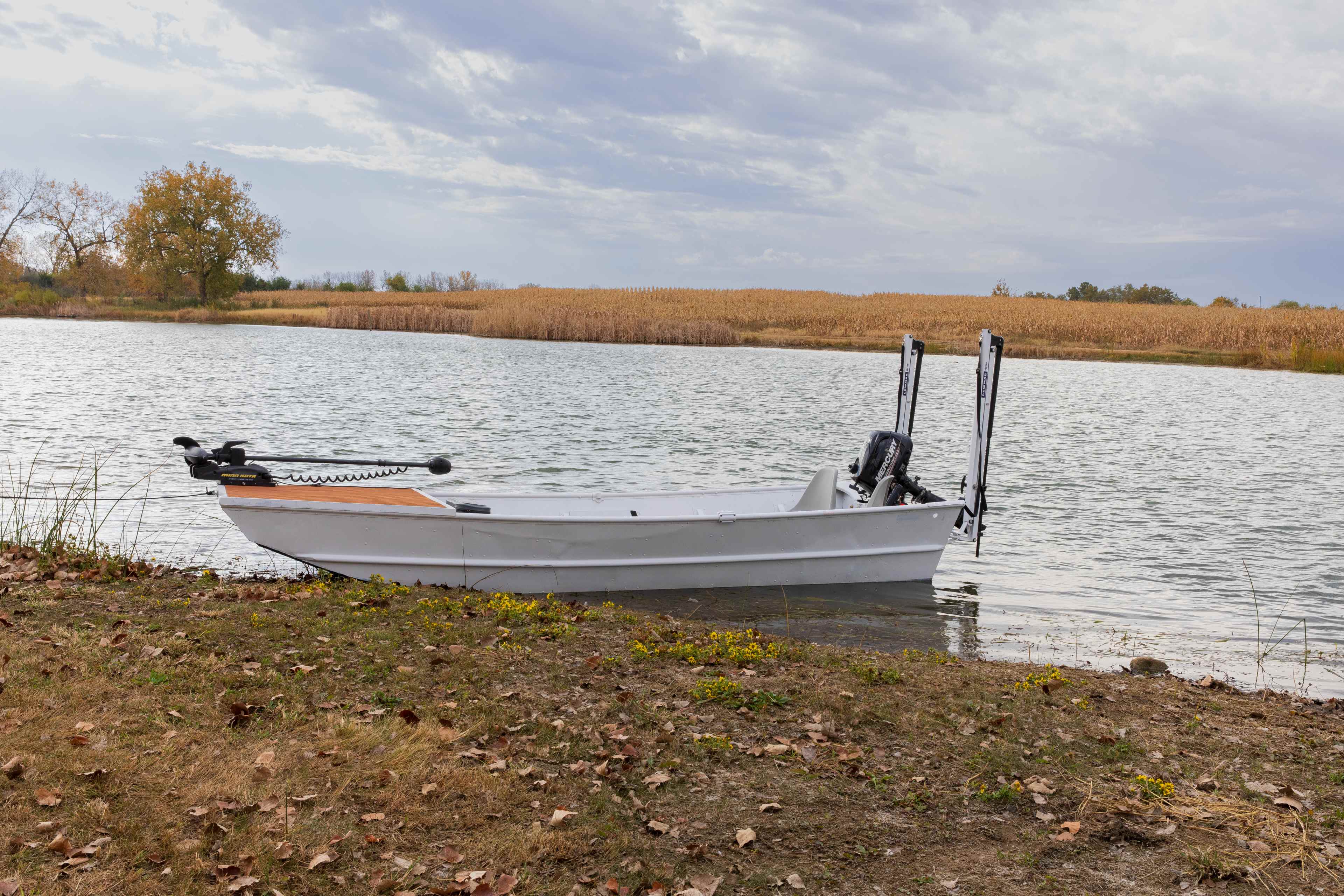
White jon boat on a lake with two white Lewmar shallow water anchors stowed upright at the transom

Thinking about two anchors?

A single anchor stops the boat. It doesn't stop the bow from swinging around that anchor when wind or current leans on it. Whether a second anchor is worth it depends on your boat and the water you fish, and that's its own guide: one shallow water anchor or two.

What belongs here is the hardware. Two Axis anchors means two RF modules and two keychain remotes, because each Axis comes with its own pair. Two Vectors means two straps, one for each.

Or maybe the question is something else

Sometimes "Axis or Vector?" is really hiding a bigger question: whether you want an anchor at all, or a GPS trolling motor doing the holding. They do different jobs and suit different water. If that's where you've landed, start with shallow water anchor or GPS trolling motor.

Questions people ask after they've decided

Buy the Vector if your boat is within 22 ft and 3,000 lb and you want no battery involved. Buy the Axis if your boat is larger, up to 26 ft and 4,500 lb, or if you want to deploy from a keychain remote. A boat that fits both should go Axis the moment the remote is something you actually want.

Ready to pick one?

  • The Axis is the electric anchor, for boats up to 26 ft and 4,500 lb, in 6-foot and 8-foot poles.
  • The Vector is the manual anchor, for boats up to 22 ft and 3,000 lb, in 6-foot and 8-foot poles, with nothing to wire.
  • The installation guide walks you through the install and points you to the manual for the anchor you bought.
  • Mounting brackets is the stop if your transom, jack plate, or deck is the thing you're worried about.

Still deciding on pole length? Start with how to choose a shallow water anchor. Wondering whether an anchor is even the right tool for your water? Read shallow water anchor or GPS trolling motor.